Search results for tag #covid
![[?]](https://cdn.mstdn.ca/accounts/avatars/111/219/508/439/408/478/original/86e705fd2b6e382e.jpg)
[P.E.I.] Masks encouraged at all Health P.E.I. facilities starting Oct. 16
Masks will be available at entrances to Health P.E.I. facilities
CBC News
October 15, 2026
By Lucas McInnis
https://stillcoviding.ca/en/news/masks-encouraged-at-all-health-p-e-i-facilities-starting-oct-16/
[Traduit de l’anglais]
[Î.-P.-É.] Le port du masque est recommandé dans tous les établissements de Santé Î.-P.-É. à compter du 16 octobre
Des masques seront offerts aux entrées des établissements de Santé Î.-P.-É.
CBC News
Le 15 octobre 2026
Par Lucas McInnis
![[?]](https://mastodon.ozioso.online/system/accounts/avatars/110/280/685/136/717/213/original/efb5f4cd051b1da3.png)
Agi: Ok della Camera a reintegro medici "Novax" radiati durante il Covid,
AGI/Vista - Con 126 voti favorevoli, 113 contrari e 2 astenuti, l’Aula di Montecitorio ha deciso di mantenere nel disegno di legge sul riordino delle professioni sanitarie l’articolo 8, che apre alla possibilità di reiscrizione all’Albo per i sanitari radiati durante la pandemia di Covid-19. La norma non prevede il reintegro automatico, ma consente ai professionisti espulsi per fatti non dolosi di presentare una richiesta di reiscrizione all’Albo. La domanda dovrà essere presentata entro 60 giorni dall’entrata in vigore della disposizione. Camera Fonte: Agenzia Vista / Alexander Jakhnagiev
Camera approves reinstatement of doctors “Novax” suspended during COVID.
The Chamber of Deputies in Montecitorio voted to maintain Article 8 in the bill reforming healthcare professions, which opens the possibility for suspended healthcare professionals to be re-registered with the Registry during the Covid-19 pandemic. The rule does not provide for automatic reinstatement but allows expelled professionals who were not acting maliciously to submit a request for re-registration with the Registry. The application must be submitted within 60 days of the provision coming into effect. Camera Source: Agenzia Vista / Alexander Jakhnagiev
Repubblica.it: Ok dalla Camera al reintegro dei medici no vax con solo 13 voti di scarto: è polemica
Scontro in aula dopo l’approvazione del ddl sulle professioni sanitarie (con i sì di Forza Italia) che prevede il reinserimento dei dottori radiati durante il Covid. Protestano le opposizioni: “Schiaffo alle vittime della pandemia”
Okay from Parliament regarding the reinstatement of unvaccinated doctors with only 13 votes against: it’s controversial.
Clash in the chamber after the approval of the bill on healthcare professions (with the yes vote from Forza Italia) which provides for the reinstatement of doctors suspended during the COVID period. The opposition protests: "A slap to the victims of the pandemic."
L'Huffington Post - News, inchieste e approfondimenti HuffPost: La Camera riabilita i medici no vax radiati durante il Covid
La norma passa per soli 13 voti. Via libera all'articolo voluto da FdI che consente ai medici radiati dall'Albo di chiedere il reintegro. M5s: “State dalla parte della cialtroneria”. Il Pd: “Un precedente pericoloso, si mistifica la memoria del Covid”. Il provvedimento dovrà passare anche al Senato
The Chamber rehabilitates doctors who were barred for refusing vaccination during the COVID pandemic.
The bill passes with only 13 votes. Green light for the article proposed by FdI that allows doctors dismissed from the Registry to request reinstatement. M5S: "You're on the side of empty boasting." The Pd: “A dangerous precedent, you distort the memory of Covid.” The measure will also need to pass through the Senate.
![[?]](https://files.sueden.social/accounts/avatars/108/250/553/701/317/656/original/ebebc12c6a89eb0a.png)
RE: https://fed.brid.gy/r/https://bsky.app/profile/did:plc:tlt75qtm4l5ivg47ho27qxbk/post/3mytynyuams2a
Ich geh dann mal wieder Masken kaufen ...
![[?]](https://mediacdn.aus.social/accounts/avatars/109/367/817/630/877/722/original/84bcdf7487466b33.jpg)
World Health Network: COVID-19 circulates year-round, and surges can happen at any time. Prevention shouldn't be limited to periods of increased transmission.
Whether you're trying to avoid infection or prevent spreading COVID-19 to others, taking precautions matters.
Wearing a well-fitting respirator, improving indoor air quality, and staying home when sick can help reduce transmission and protect our communities.
#COVID #COVID19 #LongCOVID #PublicHealth #InfectionPrevention
Source: https://bsky.app/profile/thewhn.bsky.social/post/3mysbfulkf22i
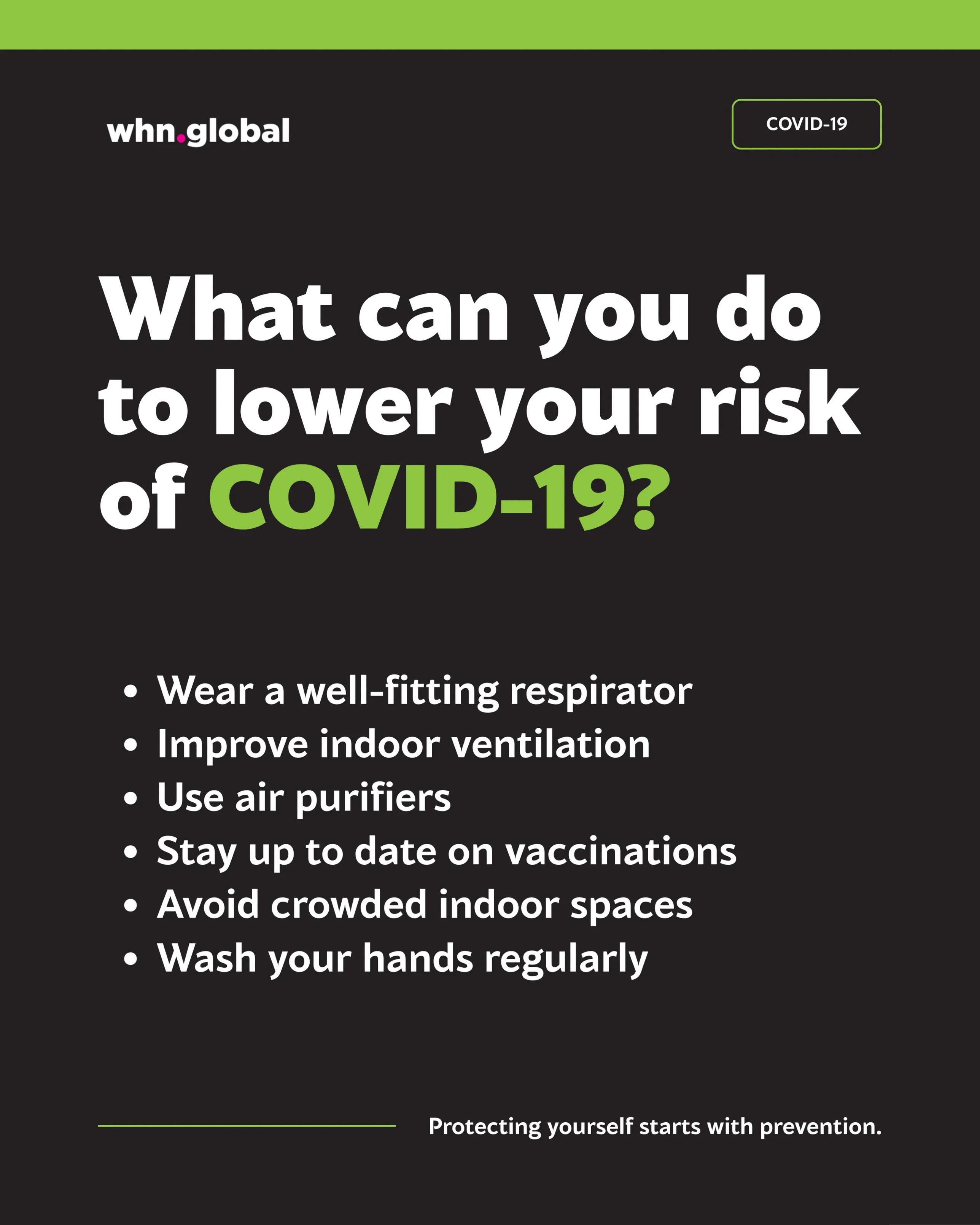
Alt...
Black graphic with a green strip at the top, the whn.global logo in the upper left, and a “COVID-19” label in the upper right.
Large heading in white and green: “What can you do to lower your risk of COVID-19?”
Bullet points:
- Wear a well-fitting respirator
- Improve indoor ventilation
- Use air purifiers
- Stay up to date on vaccinations
- Avoid crowded indoor spaces
- Wash your hands regularly
At the bottom: “Protecting yourself starts with prevention.”
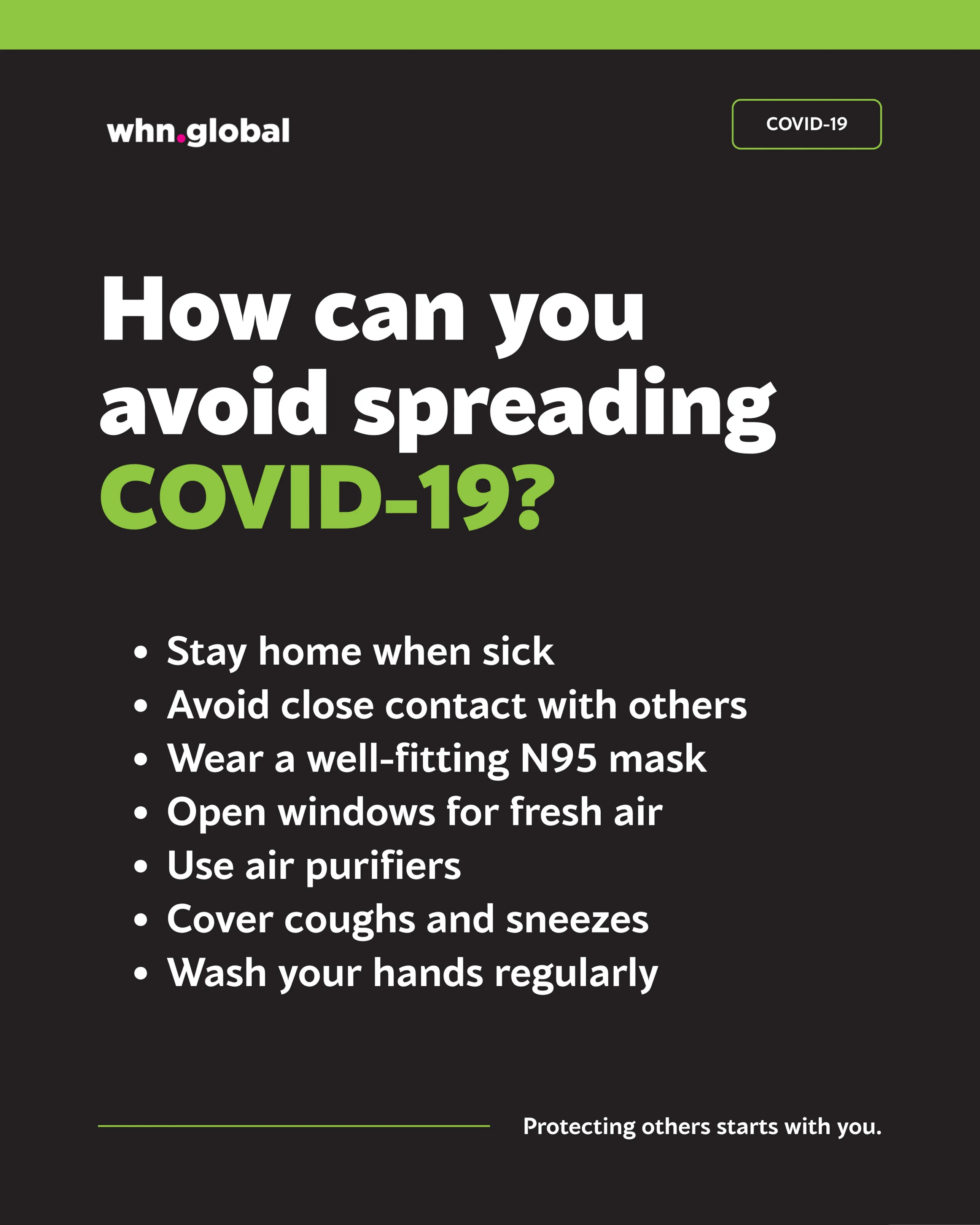
Alt...
Black graphic with a green strip at the top, the whn.global logo in the upper left, and a “COVID-19” label in the upper right.
Large heading in white and green: “How can you avoid spreading COVID-19?”
Bullet points:
- Stay home when sick
- Avoid close contact with others
- Wear a well-fitting N95 mask
- Open windows for fresh air
- Use air purifiers
- Cover coughs and sneezes
- Wash your hands regularly
At the bottom: “Protecting others starts with you.”
![[?]](https://s3.eu-central-2.wasabisys.com/mastodonworld/accounts/avatars/112/369/435/955/694/242/original/a64c97bff1943976.jpg)
![[?]](https://cdn.mstdn.ca/accounts/avatars/114/263/199/087/995/982/original/7d39d03cf9e1ee86.png)
![[?]](https://s3.eu-central-2.wasabisys.com/mastodonworld/accounts/avatars/115/004/966/010/922/580/original/9c984c3da4f34c0b.jpg)
💉 ⚕️ Ottawa residents can now get flu shots and COVID-19 vaccines
All individuals over six months of age are now eligible for both the flu and COVID-19 vaccine.
People can receive their vaccines at pharmacies or local health care providers.
https://www.ctvnews.ca/ottawa/article/ottawa-residents-can-now-get-flu-shots-and-covid-19-vaccines/
![[?]](https://toot.wales/system/accounts/avatars/109/304/029/112/733/092/original/7f0123a0d5de06b5.jpg)
@statsguy COVID too. I'm two weeks too young for a free jab. Cost me £97 for the second year running. I can afford it but many cannot. #vaccination #COVID #flu
![[?]](https://cdn.masto.host/kindsocial/accounts/avatars/116/338/029/571/109/138/original/44983ec439ca2408.jpg)
Dianna Cowern aka Physics Girl on getting "a very mild" case of COVID19, and becoming disabled with LongCOVID as a result.
It's been four years, Dianna is still disabled, and most doctors still don't accept LongCOVID as a real diagnosis, much less agree on a treatment.
Worth listening to (or reading the transcript, if that works better for you)
![[?]](https://files.hear-me.social/accounts/avatars/116/321/507/429/831/657/original/4f7a92ec7d82e7c1.jpeg)
@STATnews @HelenBranswell was the only one reporting on covid as early as January 1, 2020 in the US. I remember seeing it that day and noting to myself that it was something to keep tabs on.
![[?]](https://v2.cache.treehouse.systems/accounts/avatars/114/009/959/990/201/452/original/43633291ccb50099.jpeg)
edit: found :) thanks!
https://ohai.social/@thatkatharine/117490877613501433
https://www.helloworlds.ca/the-long-covid-game/
original post:
one of yall COVID-cool Fediversians linked a really interesting educational rpg and i'm so struggling to find it -- please help!
iirc a teacher created a slideshow game that uses the metaphor of a curse and wards that, with dice rolls, represented COVID, Long COVID, and appropriate measures to stop transmission
i'm wanting to adapt this and expand on it for educational programming, but i cannot at all find the original. can anyone help me out?
boosts welcome :)
![[?]](https://toot.wales/system/accounts/avatars/109/313/667/595/858/120/original/32dc726b0e43a2e4.png)
After a lot of back and forth and not being sure if it would happen, I have finally been vaccinated against covid and flu.
£98 lighter, thanks to a 10% off discount for having 2 vaccines at once.

Alt...
A woman with light skin tone and bright pink hair wearing a white and pink striped knitted jumper with a small round blue sticker which says "I've had my flu jab"
![[?]](https://fedi.aiga.rocks/fileserver/01RRHSTW3Y58NKJ6C0PJ21ED3X/attachment/original/01M1WCCJE19WPSH5Q5YPH7R5CY.png)
*on the Titanic as it’s sinking*
Passenger to crew: help! Do you have anything to keep me from drowning?!
Crew: yes, *points to life vest* but it will make you look fat.
Passenger: oh never mind then.
![[?]](https://assets.ottawa.place/accounts/avatars/115/927/749/395/958/688/original/b3559ebec0af0e9a.jpeg)
![[?]](https://media.infosec.exchange/infosec.exchange/accounts/avatars/114/490/296/424/433/045/original/ef50f0e462fa49dc.png)
![[?]](https://media.infosec.exchange/infosec.exchange/accounts/avatars/109/258/100/524/532/922/original/26875d605fe4cec2.jpeg)
Greetings, here are the weekly #washingtonstate #kingcounty (that is, #seattle and environs) #COVID #COVID19 #wastewater toots.
A reminder that this King County respiratory disease data comes from Washington State, not the federal government.
The West Point (WSPT) sewage treatment plant's SARS-CoV2 seven-day running average numbers are bouncing around a fairly high range. The last seven day running average calculation was done on 10/13.
WSPT is one of three King County(-ish) sewersheds in this dataset. You can find overviews, individual sewershed results, and a breakdown of variants for the state wastewater surveillance program, along with other metrics like case counts and hospitalizations for Covid-19 and other respiratory illnesses, at https://doh.wa.gov/data-and-statistical-reports/diseases-and-chronic-conditions/communicable-disease-surveillance-data/respiratory-illness-data-dashboard#WasteWater. If you go to the page and click "learn more" in the statewide view tab, you can find out lots of details about how these data are calculated and how to interpret them. The dashboard gets updated every Wednesday (generally). The Department of Health is here on the fediweb, at @WADeptHealth
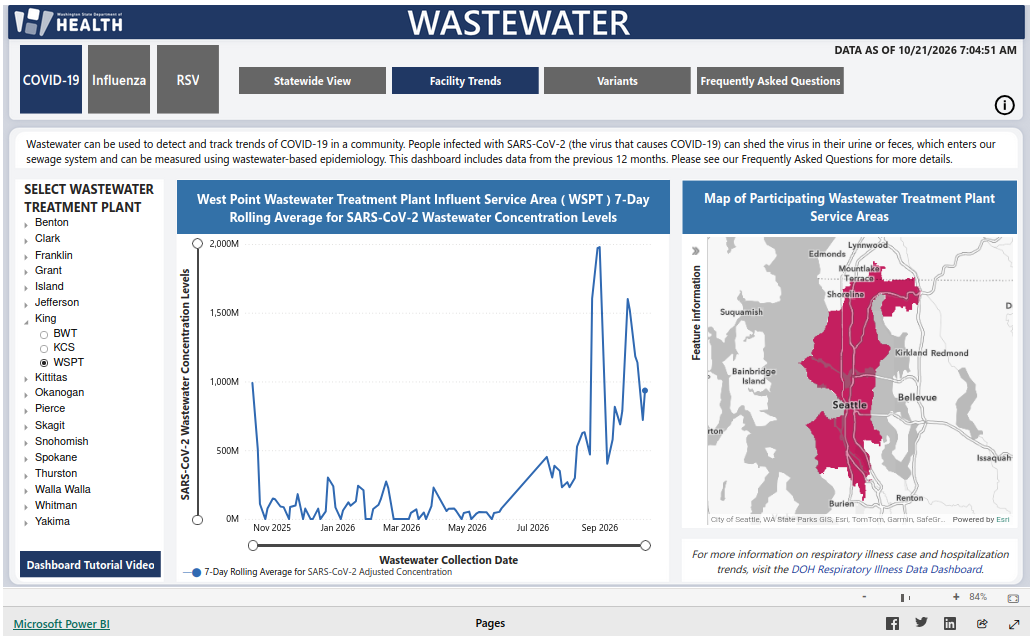
Alt...
A screencap of the Washington State Department of Health's Covid wastewater data for the West Point Wastewater Treatment Plant. The trend line of the graph is described in the toot text.
![[?]](https://m.f-h.co/cosocial-ca/accounts/avatars/116/268/787/813/906/469/original/998a79862e3fb13e.jpg)
Good Morning #Canada
I'm feeling irritable and beat up this morning - likely the result of my wife and I getting our #Flu and #COVID shots yesterday. I'm not sorry about suffering a little bit for protection and I'll be back to my cute and cuddly self by tomorrow. Meanwhile the latest respiratory virus surveillance report from #HealthCanada (Oct.16th) shows infections are up slightly and #FluSeason has almost officially started.
#CanadaIsAwesome #GetVaccinated
https://health-infobase.canada.ca/respiratory-virus-surveillance/
![[?]](https://sfo3.digitaloceanspaces.com/veganism-space/accounts/avatars/116/515/958/099/907/101/original/66267b02a7168da4.jpg)
A second #Labour MP has been suspended from the party amid concerns that he tried to avoid repaying a taxpayer-funded #Covid loan.
Perran Moon, the MP for Camborne and Redruth, is accused of trying to wind up his company in November 2022 without paying off a bounce back loan given to support small businesses during the pandemic
It comes after Bayo Alaba, the Labour MP for Southend East and Rochford, was suspended in August following his refusal to say whether two attempts to wind up his business were blocked because he had failed to repay an outstanding loan.
Oh dear.
![[?]](https://mastodon.nl/system/accounts/avatars/109/524/134/697/069/792/original/8a051fd037ec593e.jpg)
Gisteren ons corona prikje gehaald. Voor het eerst heb ik last van bijwerkingen. Een nacht met hele vreemde ijldromen, koorts, alles doet pijn en ook nog een zere arm. Herkenbaar voor meer mensen? 🙄
#covid #vaccinatie